Community Based Medical Education
The Mahatma Gandhi Institute of Medical Sciences, Sevagram (MGIMS) was established with the objective of producing doctors with a bias towards underprivileged and rural areas. The institute has made several innovations in its curriculum to raise the social consciousness of medical students as well as to equip them to work in rural areas. These innovations have been woven into every stage of the medical curriculum at MGIMS, Sevagram. MGIMS Sevagram partners with the community on the one hand and the district health system and the other related departments on the other hand, for the mutual benefit of all partners.
1. Settings For Community-Based Medical Education
Through its innovative approach, the institute has developed a very good setting for imparting community-based education to its students.
1.1. General Out Patient Department (GOPD)
The GOPD is a unique feature of MGIMS, Sevagram and it serves as a linkage between peripheral health activities and Kasturba Hospital, Sevagram. It works as replica of a primary health centre in a teaching hospital. It was started basically to reduce the workload of specialists by filtering out the patients who require specialist care Besides serving as a referral unit, the GOPD provides treatment for minor illnesses. The GOPD also runs a counseling guidance cell, immunization clinics and DOTS and microscopy center. GOPD provides a setting for training of interns, where they treat minor illnesses under supervision of post-graduate students and faculty members of Community Medicine.
1.2 Decentralized health care delivery through rural and urban health training centers
The Department of Community Medicine, MGIMS, Sevagram has adopted four PHCs; Anji, Gaul, Kharangana and Talegaon with a population of more than 120,000 and developed a model of decentralized healthcare delivery at village level through Community-based Organizations and the Panchayati Raj Institutions. It has formed 277 self-help groups, 12 Kisan Vikas Manch and 88 Kishori Panchayat in the adopted villages which provide a platform for dissemination of behavior change communication (BCC) messages. It runs community outreach clinics in 23 villages to provide curative health care to the rural populace. Through innovative strategies, family life education is provided to adolescent girls both in schools and out of schools in all the program villages.
The Institute has developed two Rural Health Training Centers at Anji and Bhidi, and an Urban Health Centre at Gandhi Memorial Leprosy Foundation, Wardha. A faculty member from the Department of Community Medicine with one post-graduate student, medical officer, interns, social worker and auxiliary nurse midwives are posted at each rural and urban health training centre. The centre works in close collaboration with the District Health System. Apart from work at the community level, the rural health training centers at Anji and Bhidi work in close collaboration with Primary Health Centre, Anji and Rural Hospital, Bhidi and support these centres in meeting community health needs. In turn, these government health facilities provide settings for training of our interns and postgraduates. At the Urban Health Centre, OPD services are provided through a general out-patient department.
In addition, a multispecialty OPD has been started at Urban Health Centre, Wardha. Weekly specialty clinics are also organized at the Rural Health Training Centers where specialists from different clinical departments viz. Medicine, Surgery, Obstetrics& Gynecology, Psychiatry, ENT, Ophthalmology and Orthopedics provide services.
1.3 Partnership with community through intense mobilisation efforts
The Department of Community Medicine, MGIMS, Sevagram (DCM) is actively involved in community mobilization in approximately 75 villages in three primary health centers under its field practice area. DCM acts as a catalyst to form community-based organizations (CBO) and builds their capacity for health action. The community-based organizations being promoted by MGIMS, Sevagram in its field practice area are:
A. Women's Self-Help Groups: Women's Self-Help Group (SHG) is a very effective tool for not only women empowerment, but also overall development of the community. MGIMS fully appreciates the critical link between women empowerment and health empowerment and plays a catalytic role to add health action agenda to their primary microfinance function. With this women have been empowered to determine health priorities and play a proactive role in health care delivery in their villages. The department has now achieved formation of 3-4 SHGs per village in all villages in its field practice area. A total of 277 Self-Help Groups were functioning on Mar 31, 2014 in the adopted villages of the Institute. Apart from these Self Help Groups, MGIMS, Sevagram also engages with the Self Help Groups formed by other non-governmental organizations in these villages.
B. Kisan Vikas Manch: Kisan Vikas Manch (Farmers' club) has evolved as a way to involve men in health activities at village level. The Institute provides learning opportunities for members to improve their agricultural yield and in turn improve their economical status. The health action agenda is added to the primary purpose so as to empower them to actively participate in the health program. Kisan Vikas Manch in the villages of Anji PHC area came together to form a federation. The federation engages experts in agriculture sector for capacity building of the members of Kisan Vikas Manch, so that farmers can get better yield from their agricultural land.
C. Adolescent Girls’ groups (KishoriPanchayat): The Institute has taken an initiative to form groups of non-school going adolescent girls in all the villages of its field practice area. At the village level, an elected body of the adolescent girls has been formed, which is known as KishoriPanchayat. Adolescent to adolescent education programme is undertaken in all villages through these groups. These groups have been oriented towards issues of adolescent health, maternal health, child survival, environmental health, and family life education, RTI/ STD, HIV/ AIDS etc. In turn, these girls will train their peers and younger adolescents in their villages. A resource center for KishoriPanchayat has been developed at the RHTC, Bhidisince 2008-09. This includes a library of health education material for adolescents with 5 satellite libraries at the school level and 10 satellite libraries at the village level.
D. Panchayati Raj Institutions (PRI) and Village Health Nutrition and Sanitation Committee (VHNSC): DCM continuously engages with PRI members in all villages in its field practice area. Orientation sessions are organized through the Rural and Urban Health Training Centers to empower the PRI and VHNSC members for health action at community level. Due to its continuous engagement with VHNSC, in most villages in the field practice area, monthly meetings of VHNSC members are ensured. DCM has also developed a system of community monitoring of health, which was successfully piloted in 20 villages in its field practice area.
The CBOs and engagement with local governing bodies ensure an enabling environment for individual and group behavior change. Individual and group behavior change in this context translates into community norms which once adopted will be sustained through intergenerational communication networks.
Formal interaction of students with community-based organizations is arranged during the social service camp, and subsequently during their monthly visit, they witness the activities of community-based organizations. This helps aspiring doctors understand the role of individuals, families and communities in preventing disease, maintaining and promoting health, and improving health seeking behaviour.
1.4. Partnership with District Health System and Integrated child development services (ICDS) scheme
Over the years, MGIMS, Sevagram has built a strong relationship with the District Health System and ICDS Scheme. Through the RHTCs, it not only supports delivery of routine health care services to the community, but also organizes training of frontline workers and supports capacity building for better implementation of national health programs. DCM has developed a system of continued professional education through the regular monthly meetings of frontline workers at PHC level. On request of the district health system, it has provided support for investigation and control of epidemics.
DCM has developed close liaison with the ICDS scheme. It has provided training to Anganwadi workers and its supervisors in Early Childhood Care and Development (ECCD) to build their capacity in delivery of child health, nutrition and development services. At present, DCM, in collaboration with the World Health Organization and INTERVIDA, a Spanish organization, is working to develop a model for promotion of ECCD through strengthening of home visits by ASHA and Anganwadi workers, organization of mothers’ meetings, and parenting workshops.
1.5 School Health Education Programme
School going children are at the most receptive age, and this has been utilized by many community programmes for infusing new ideas into the community. Children can be utilized to disseminate health education messages to families and neighborhoods to change the attitudes and traditional practices of the community. The Department of Community Medicine started a continuing school health programme in two schools in Anji through its Rural Health Center in January 1999. Gradually, this programme has been undertaken at all the centres of the department. At present the programme is going on in twenty schools of Wardha District.
2. Milestones in community-based learning at Sevagram
Milestone 1: Orientation camp in Gandhi ashram
Candidates from all over the country are selected on the basis of a common eligibility examination, which included a mandatory paper on Gandhian Thought. Soon after admission into the Institute, students attend a 15-day orientation course where they learn about a value system based on Gandhian ideology. They are thus helped to appreciate the humanistic dimensions of their profession. The students engage in self-help by washing their own utensils and cleaning their own clothes. Students also participate in community activities like spinning yarn (khadi) and in morning and evening all-religion prayers.
Observation of this code of conduct helps towards an understanding the value of honesty, dignity of labor, and the need for religious tolerance. The students are taught about the relevance of Gandhian ideology in today’s world with reference to personal hygiene, environmental sanitation, nutrition and spiritual health, and the roles of yoga and nature cure are discussed.
Milestone 2: Village Adoption Scheme
Social Service Camp
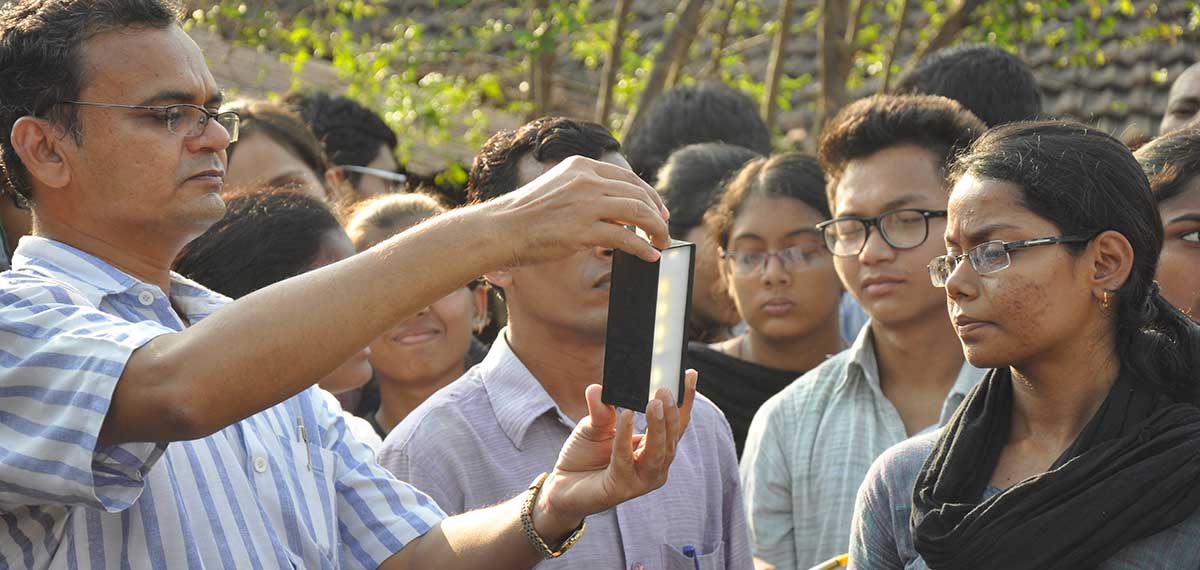
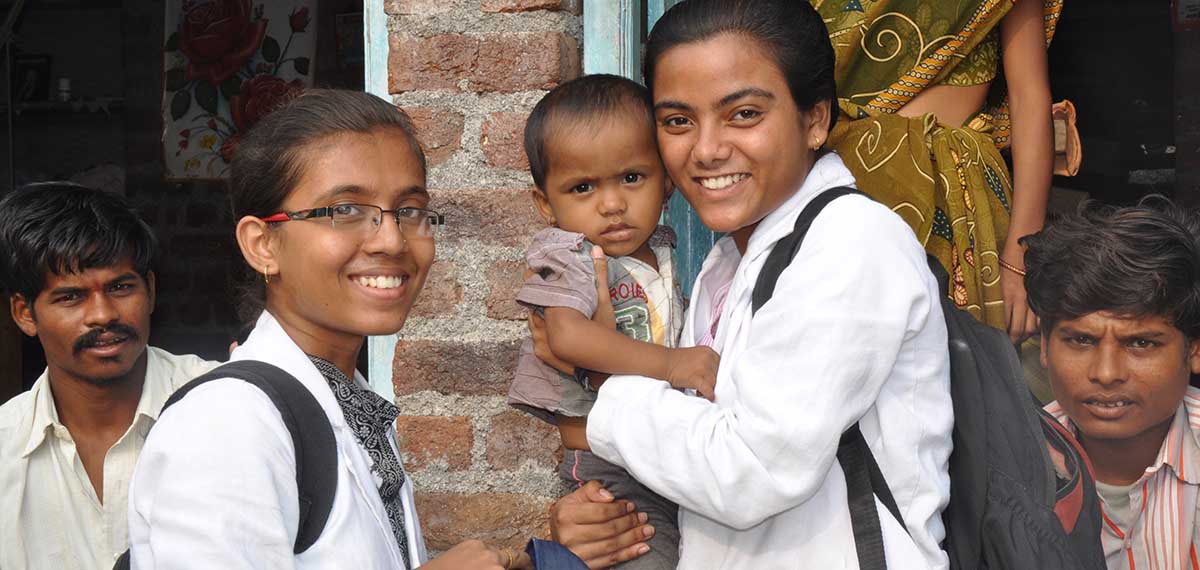
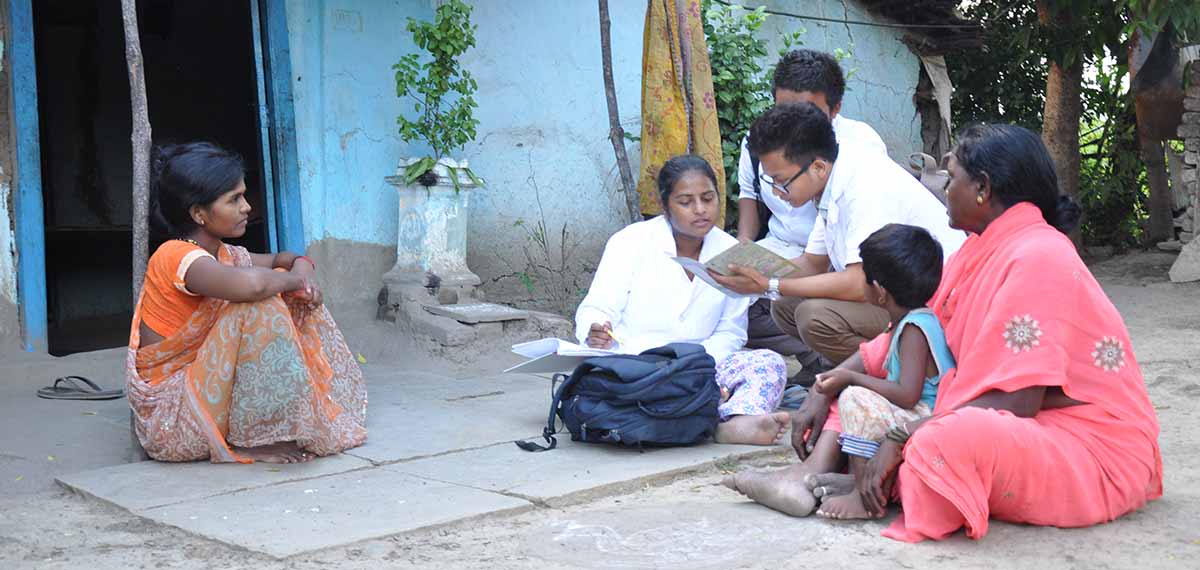
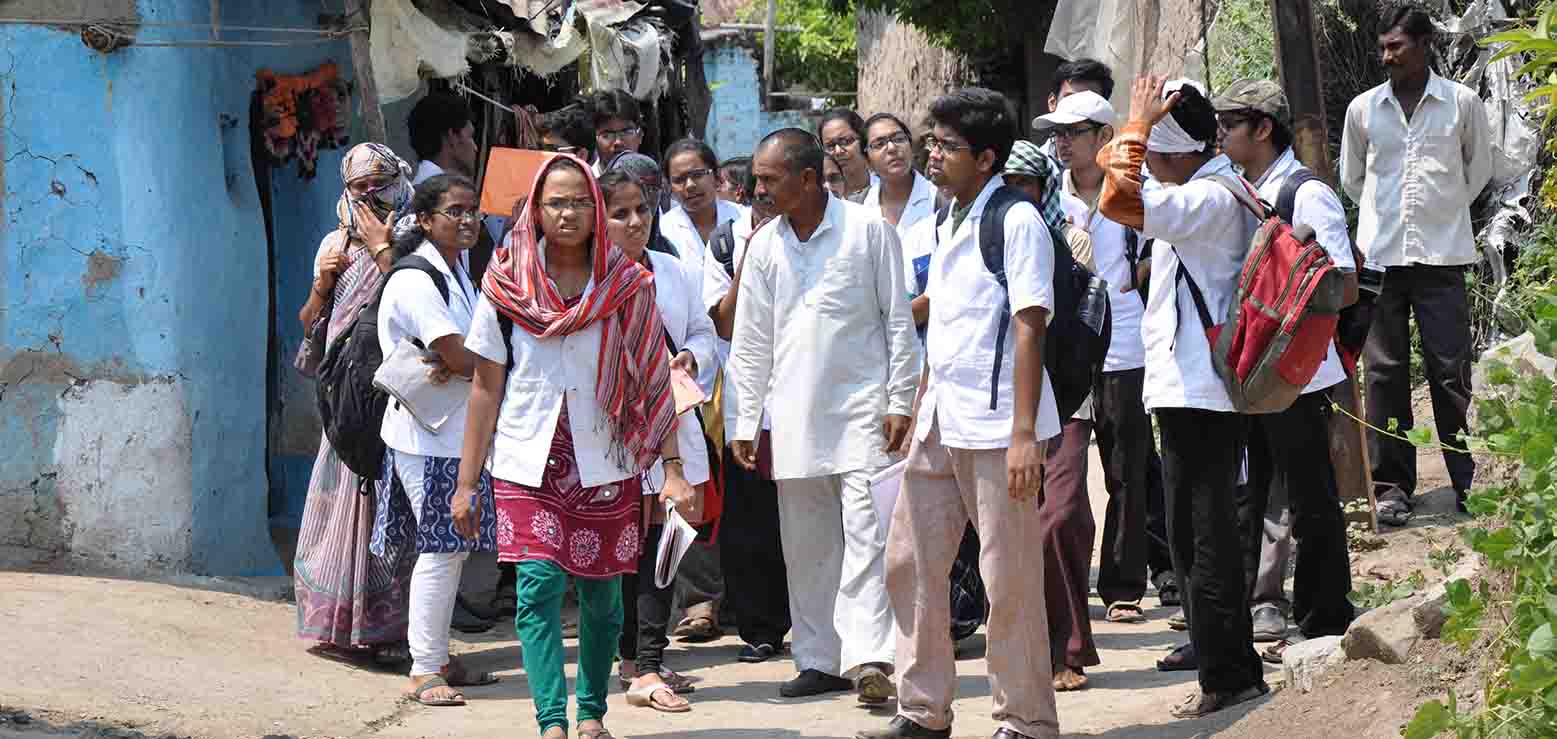
During the camp period, students stay in the adopted village for a fortnight and visit their adopted families daily. With the help of interns and staff of MGIMS they conduct socio-demographic, dietary and health appraisals in their adopted families. The students also observe how community leaders, social organizations and village health committees work together for health. The roles of village health workers, village health committees, school teachers and other stakeholders are examined. This community–academic partnership offers a unique opportunity to learn the social and cultural determinants of health. Thus, the village serves as a laboratory and a demonstration center for the students to learn public health. The concept of family health care is brought home to students with the help of auxiliary nursing midwives, social workers, health educators, sanitary inspectors, psychologists and public health physicians working in the villages.
Criteria for selection of village for Social Service Camp
- Demand from the village in the form a resolution passed by the Gram Panchayat
- Population of the village between 1500 – 2000 so that each student gets 3-4 families for family study
- Distance of the village from institution preferably less than 30 km
- Adequate space so that the following could be arranged:
- space at a central location in village for erecting pendalfor camp activities
- space for Health Exhibition
- lodging arrangement for boys and girls separately
- lodging arrangement for staff staying at the camp site
- space for common kitchen and dining
- improvised sanitation facilities for camping students and staff
- Usually the village school building is used for accommodating the camping students after obtaining permission from the District Education Officer. The institute also makes alternative arrangement for conducting classes of the school students.
- Provision of water and electricity, for which the Institution pays the actual charges.
- Assurance of active participation and support from villagers
Health care services provided to the adopted village
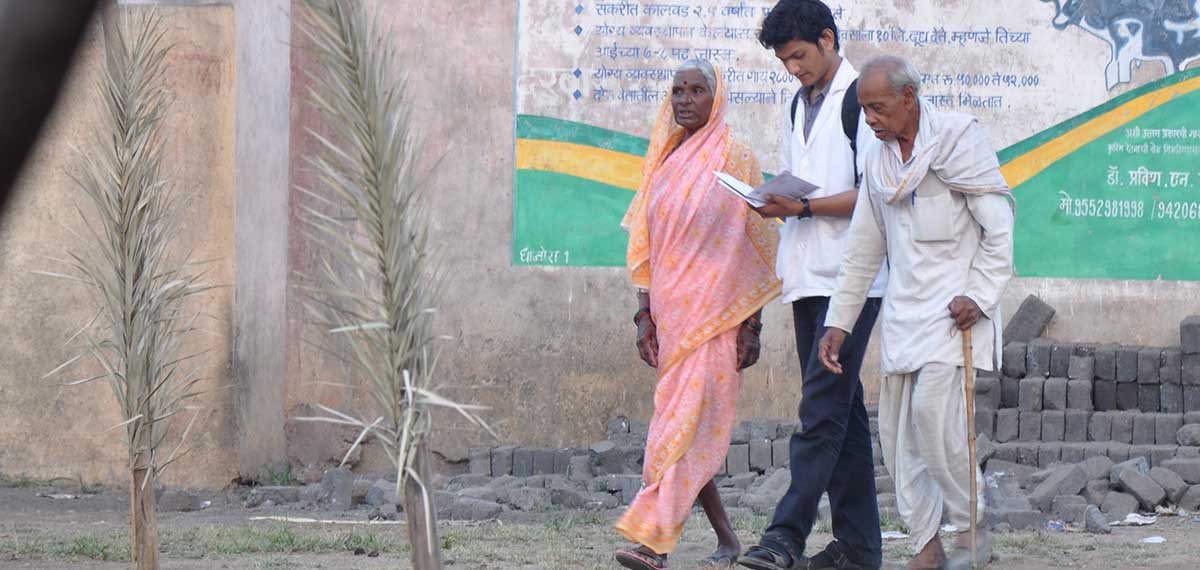
The Institute extends its health care services free of cost to the village for the duration of the social service camp. Complete health check-up of all the villagers is conducted. Blood, urine and stool investigations are carried out for each villager and those who are found to have any abnormality on these investigations are provided free treatment. General OPD is run each day, both in the morning and evening, and specialist visits are organized. The camping students ensure that all members in their adopted families get complete treatment for their ailments. Those who require hospital admission are also provided treatment free of cost if they get admitted to the Kasturba Hospital Sevagram during the duration of camp or within 7 days of completion of the camp.
Monthly follow-up of the adopted families
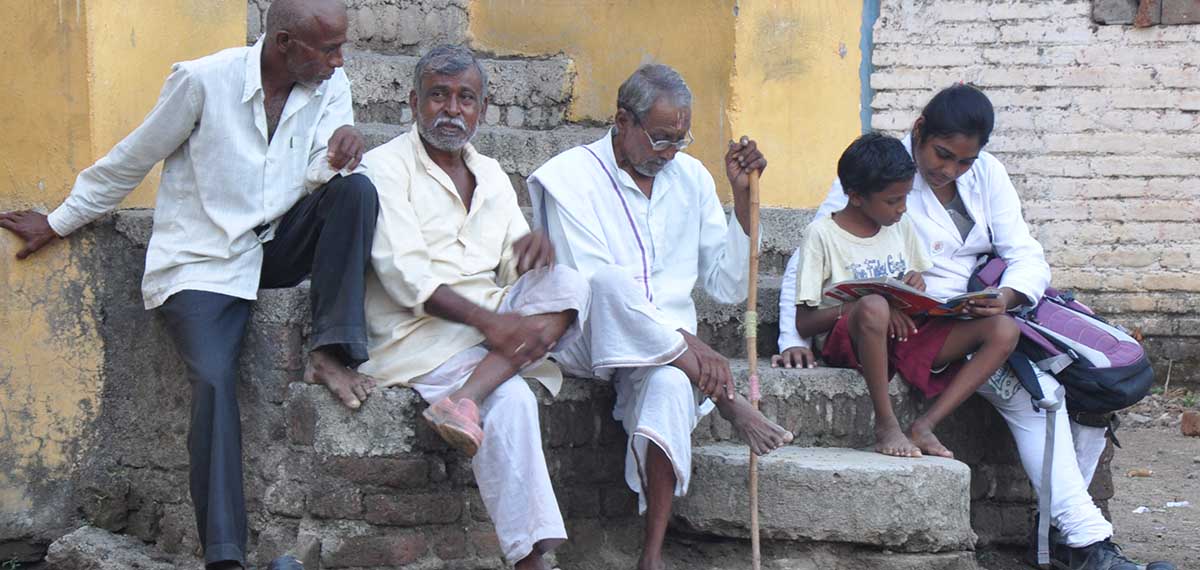
Following the Social Service Camp, for the next three and a half years, the students visit their adopted village every month on a Saturday. In the first year, the students study personal hygiene, basic sanitation, housing, immunization, diet, nutrition, growth and development. During the subsequent period, groups of students undertake improvement projects on topics of sanitation, drinking water, nutrition, personal hygiene, immunization and other relevant issues.
During these years, the social workers of the department also work for overall development of the village through formation of different community-based groups, e.g. Self-Help Groups, Kisan Vikas Manch etc. Efforts are being made to gradually strengthen these groups.
The Institute runs a free OPD for the villagers during these visits. This also provides the students with an opportunity to learn from the villagers.
Essential community based national health research:
To build research aptitude and interest in priority health topics among undergraduate students, they are provided opportunities to participate in conducting community-based research on priority health topics (Essential National Health Research). To orient undergraduate students to research methodology, initially a two-day workshop is organized for students.The workshop aims at providing the students knowledge and skills on ‘asking the right question’, ‘designing an appropriate study design to answer the question’, ‘searching relevant literature’ and ‘writing a protocol’ for carrying out a project. During the workshop, students in groups identify a topic of their interest for further enquiry. The students conduct the project in groups in their adopted villages under the guidance of a faculty member from the Department of Community Medicine. Community-based projects, with the interventions related to behavior change are encouraged, so that the community also gets benefitted in this process. With the help of faculty members, the students perform data entry, analyze it and write a report for their project. Posting during Re-orientation of Medical Education (ROME) Camp,of 15-days duration in fourth year, provides another opportunity to learn how to identify community needs using rapid survey methodology and qualitative research methods.
Opportunity to learn leadership skills
Leadership is a broad term and an amalgam of the subset of following skills; viz. envisioning, team building, strategic and tactical planning, decision-making, being a change agent (activism and lateral leadership), communication skills (including active listening, persuasive communication and negotiation), and conflict resolution.
Social Service Camp and subsequent monthly village visits provide an excellent platform for learning leadership skills through participation in community-based activities. Interactive sessions are conducted for students on leadership skills; including communications skills, activism, working as a change agent, problem solving, team building, assertiveness etc. Through interaction with the family members, students develop good rapport with the family, empathy and communication skills. During the camp, students convince and mobilize families allotted to them to avail the benefit of screening and curative services provided through the camp. This helps them practice persuasive communication and negotiation skills. The students also get ample opportunities to interact with the community-based organizations and formal and informal leaders in the village. This enhances their understanding. Group exercises during the fieldwork and classroom teaching also helps them learn team building, negotiation and conflict resolution. Group exercises also help students to identify their own strengths and weaknesses for the leadership skills and prepare a personal improvement plan.
Milestone 3: Re-orientation of Medical Education Camp (ROME Camp):
A field camp lasting for two weeks is organized for students, during their third year in the medical college. The students stay at one of the Rural Health Training Centres of MGIMS, Sevagram. The camp is organized with the objectives; 1) to expose students to the health care delivery system; other support systems available in the community and implementation of national health programs at PHC level; 2) to make students understand the effect of family and social environment in the etiology of diseases; community beliefs and practices related to health and illnesses; and treatment-seeking practice; 3) to expose students to commonly used survey methodology for community need assessment.
During this camp, the students visits different levels of health care facilities and interact with health care providers. Through this, they are exposed to the functioning of a primary health centre and the roles of its various staff members. District level program managers for various national health programmes discuss with them implementation of national health programmes; their strengths; and barriers and challenges in implementation of these programmes.
Clinical case discussion is organized at the family level through which attention of students is drawn to the influence of social and environmental factors in the causation of disease. Students also come to understand the common community beliefs and practices related to health and illness and treatment seeking practices of the community. The students design and conduct small community surveys for community need assessment in rural area. Through these surveys, they become acquainted with the collection, entry and analysis of data and with report writing. Their insight gained into essential national health research earlier through the ‘Problem Solving for Better Health’ workshop and project conducted in their adopted village is further enhanced.
Milestone 4: Internship training
Interns are posted in the department for two months out of their 12 months internship period. During this period they are posted at General OPD, KRHTC Anji&Bhidi and Urban Health Centre. The setting at Sevagram provides them with an opportunity not only to learn management of illnesses at individual level, but also learn organization and functioning of Primary Health Centre & various National Health Programmes.
Through its innovative curriculum, MGIMS Sevagram has brought a changed paradigm to medical education by providing students with community experiences that serve as laboratories for transferring appropriate values and developing fundamental knowledge, skills and attitudes required to make them socially responsive. Through partnership with the community, the district health system and other departments, the institute has created a conducive environment for student learning in community settings.